

Need to Skim it?
Short on time? Here’s a speedy summary of our guide to swimming pool care.
- Neglecting your pool care can be pricey: an unclean, under-maintained pool degrades at a rapid rate. Taking a few weekly, monthly, and quarterly steps is all it takes to save your pool (and your wallet).
- If you’re opting to do all your own maintenance, you’ll have to set aside time on a weekly basis at least (and more frequently in Summer’s storm season)
- If you’ve got an especially large or complex pool, it’s best to get guidance from a professional from the get-go: your routine for cleaning might be different.
- As with your pool chemicals, it’s all about balance. It can take some time to find out what schedule and mix of services works for you: never be afraid to seek advice from a pro.
Where do you start when it comes to keeping your pool clean?
Owning a swimming pool is an incredible lifestyle booster, but it does require a degree of regular care and maintenance. In fact, swimming pool maintenance is essential if you want to keep your pool healthy: without it, pool water can’t be safe to swim in, your pool equipment can’t function at its best, and you can even shorten the life of your pool’s structural elements.
Because of how critical this task is, plenty of homeowners choose to outsource their pool cleaning to a professional pool maintenance expert rather than take the DIY route. In reality, it’s usually somewhere in between: a pool owner will need support from an expert, while also needing an understanding of basic pool maintenance. Both DIY and professional care have their benefits and drawbacks, so it pays to understand what you’re getting yourself into.
Your choice will depend on how much time you have available, your level of experience, and your pool’s complexity and size. In this guide, we’ll talk you through the basics of DIY maintenance, what professional servicing and repairs involve, and how to determine the best pool care plan for you.
Why Regular Pool Care Is Important
Without routine maintenance, your pool may not only become unsafe to swim in, but will also risk extensive (and expensive) repairs.
Here are just a few of the issues you need to consider as you look after your pool.
Protect pool equipment (filter systems, pumps, and surfaces) from damage
These components of your pool can be expensive to replace – and can even put your pool out of action for long periods of time.
Keep your pool chemical levels balanced and safe
It’s not just unpleasant to be in a pool when the pool chemicals are unbalanced – it can cause some truly unpleasant health issues! The chemical balance of your pool is a hygiene issue: a pool with unbalanced pool water can become a breeding ground for bacteria and algae, which can, in turn, contribute to health complications, including skin infections, the spread of gastrointestinal illnesses, and even life-threatening respiratory conditions like Legionnaires’ disease.
Prevent chemical risks
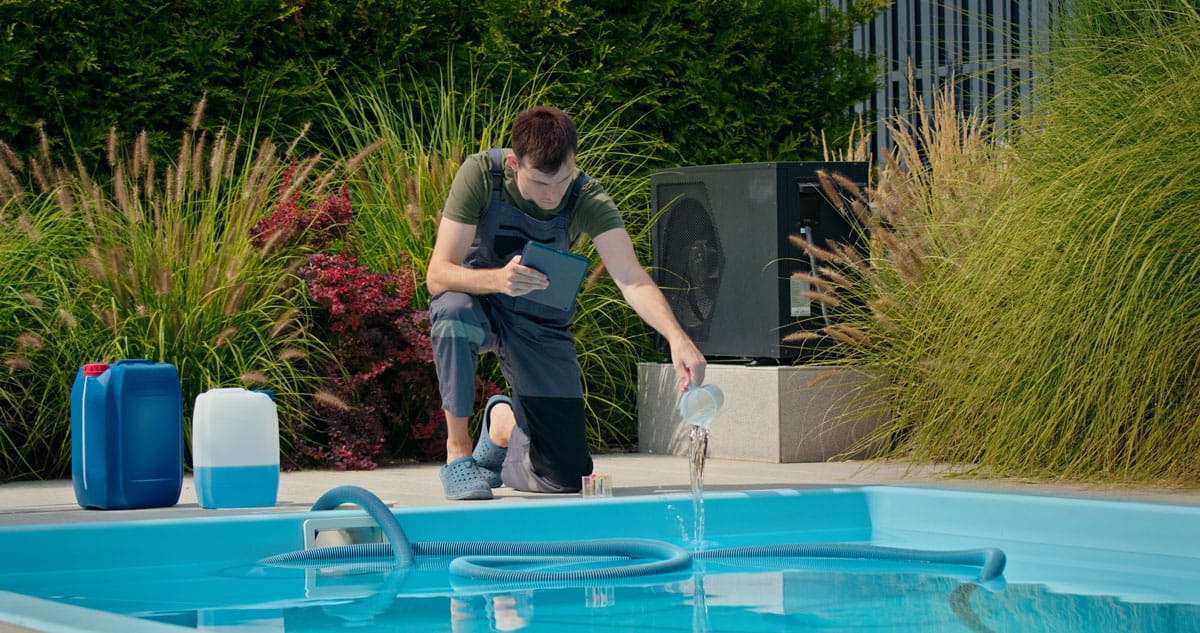
It’s important to note that the chemicals themselves can pose significant health risks: accidentally mixing pool chemicals can result in toxic gases, and even chemical burns. Wearing appropriate PPE is essential, and having a safe place for storing chemicals, too: they need to be kept out of reach of children and many are flammable. Professionals use specialised tools and expertise to maintain optimal pool water quality: they have much greater access to accurate testing equipment, and can use this to resolve problems in water quality much more quickly.
Prevent accidents along the way
While it’s great to learn a new skill and DIY some of this maintenance, errors (or neglecting to do any of these tasks) can lead to expensive repairs. Clean, well-maintained pumps, pool filters, and surfaces last longer – and can be expensive to replace when they’re not looked after properly. Pool components are no different to any other part of your house: your filter, pumps, and pool surfaces will last much longer when you take the time to check and clean them on a regular basis.
Our Guide to Pool Maintenance: What Homeowners Need to Know
Most pool owners at least want to know what tasks are involved in caring for their pool, even if they’re not going to be taking on the tasks themselves. So, here are the basic maintenance tasks that your pool needs to stay healthy.
Skimming leaves and debris
This is a daily task for most pool owners during the heavy-usage summer period l, but, as pool use dials down, can be dropped to 2-3 times a week when you’re not swimming as much.
Brushing pool walls and floors
It’s important to do this task weekly and using the right kind of brush. While it might seem like it’s just for aesthetics, it’s actually a crucial strategy against algae and bacteria that are dislodged in the process.
Tip: Make sure you’ve got the right kind of brush for your pool’s finish. A concrete surface needs a stiff brush, but this kind of a brush can damage a vinyl pool. Ask a professional if you notice any degradation of the surface of your pool.
Vacuuming the pool
These come in both automatic and manual versions – but either way, it’s best practice to run your vacuum at least once a week. To ensure proper maintenance without the effort, many homeowners opt for a robotic pool cleaner (otherwise known as an automatic pool cleaner or vacuum): this ensures their pool remains on a tight cleaning schedule, even when they can’t be there to vacuum by hand.
Tip: Living in a storm-prone environment means you’ll need to vacuum more during the turbulent summer seasons. Two to three times a week in storm season may be necessary.
Cleaning filters and pump baskets
Clean pump baskets on a weekly basis and filters at least monthly. You’ll need to do both of these tasks more often in storm season when leaves, water runoff, and debris are being blown into your pool at high volumes.
Testing and balancing water chemistry
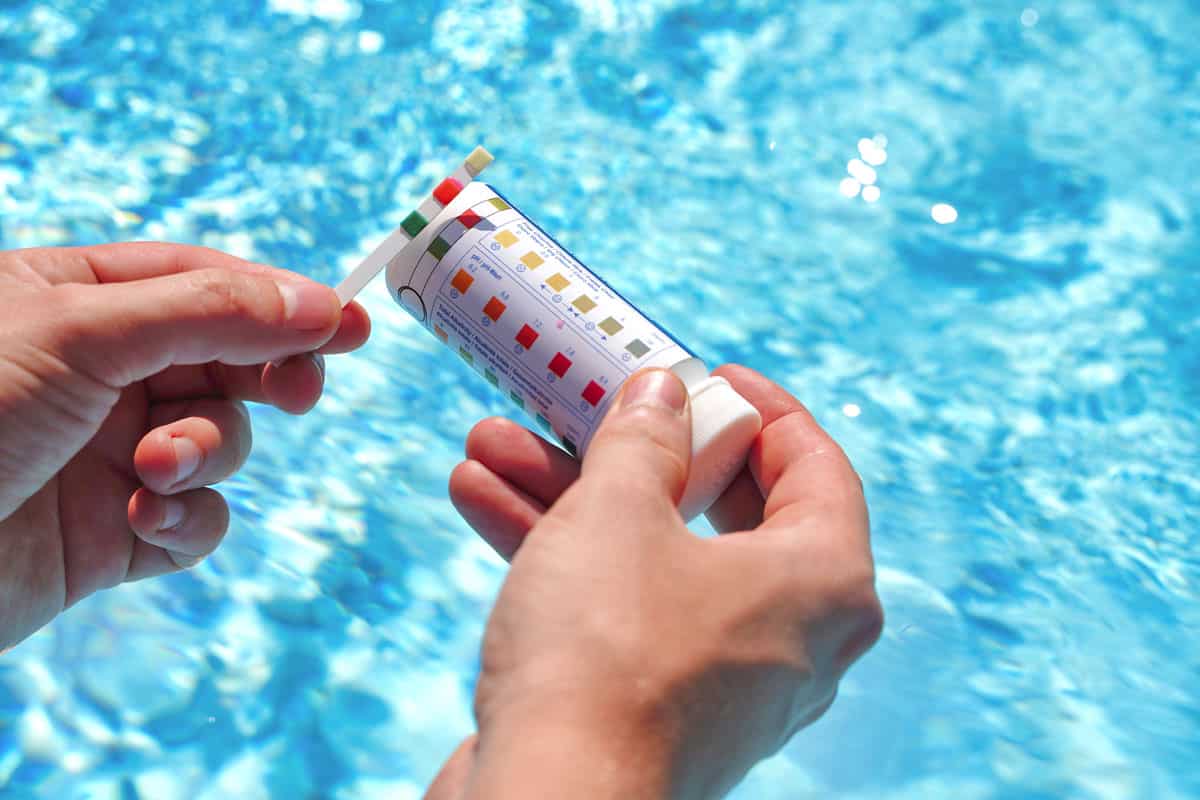
Ideally, you should test your water chemistry once a week. You will need a reliable testing kit or reliable testing strips, and should be measuring pH level, total alkalinity, calcium hardness, and chlorine levels.
A Beginner’s Guide to Interpreting Levels:
pH levels: Anything lower than 7 is too acidic, while anything above 8 can cause skin irritation and mean that chlorine’s sanitising effectiveness isn’t at its peak. The ideal range is often cited as between 7.2 and 7.6.
Alkalinity: The alkalinity of your pool helps to keep the pH in a reasonable and stable range. 100-120 parts per million is often called the ‘sweet spot’.
Calcium Hardness: Low calcium levels can make the water more corrosive, meaning that your equipment and surfaces will degrade at a faster rate. Levels will depend on the kind of pool surface you have, but the ideal range is usually between 200 and 400 parts per million.
Chlorine levels: Chlorine is the main sanitising agent in your pool. While your pool type will determine your ideal levels, it should fall between 1 and 3 parts per million for most pool owners.
DIY Cleaning: When should you do your own pool maintenance?
There are a number of reasons you might choose to do your own pool maintenance, but the main reason for most homeowners is a lower labour cost. While you’ll still have to pay for the chemicals and equipment if you’re choosing DIY, you won’t have a regular callout fee.
You’ll also have greater control over your maintenance schedule: you won’t have to wait for your pool technician’s availability. It can also be highly rewarding to learn about how your pool system works and to tend to it yourself: you could even help to diagnose a problem before your pool technician arrives!
Our verdict? Smaller home pools are usually able to be monitored and managed by their owners, with routine check-ups and monitoring from professionals on a quarterly basis. And, of course, call in an experienced technician if there’s anything that seems out of the ordinary: look for cloudy or discoloured water, dramatic changes in water levels, strange odours, and equipment that doesn’t seem to be doing its job.
When is Professional Maintenance the Better Option?
So, when do you call in the pros? We often recommend support from a team of professionals if you’re dealing with complex situations, including recurring algae or water balance issues, or if you’re dealing with a pool that remains unusedforr a long period of time.
If you’re a landlord or lessor of a property, it’s also generally a good idea to engage a professional, as you can’t always personally attend the site.
And finally, if you’ve got an especially large pool, or one with complex components like “infinity” edges, it’s always good to have a professional involved.
Finding the Right Balance
The most realistic care strategy for most homeowners is a hybrid of DIY and professional servicing. While plenty of homeowners are happy to take on some of the easier regular maintenance, it’s often a better idea to pass some of the more complicated tasks off to professionals.
For most people, it’s enough to manage the weekly DIY cleaning of removing leaves and resetting the pool vacuum. But most people will defer to a professional for water balancing and equipment inspection, either on a monthly or quarterly basis.
It’s all about finding a balance that works for your schedule and budget, and one that protects your pool in the long term.
But the key is this: whether you maintain your pool by yourself or prefer weekly professional servicing, consistent care is key!
Need some guidance on your own pool maintenance schedule and strategy? Get in touch with us if your pool is in need of some TLC, or if you’re not sure where to start. We’re here to help!
